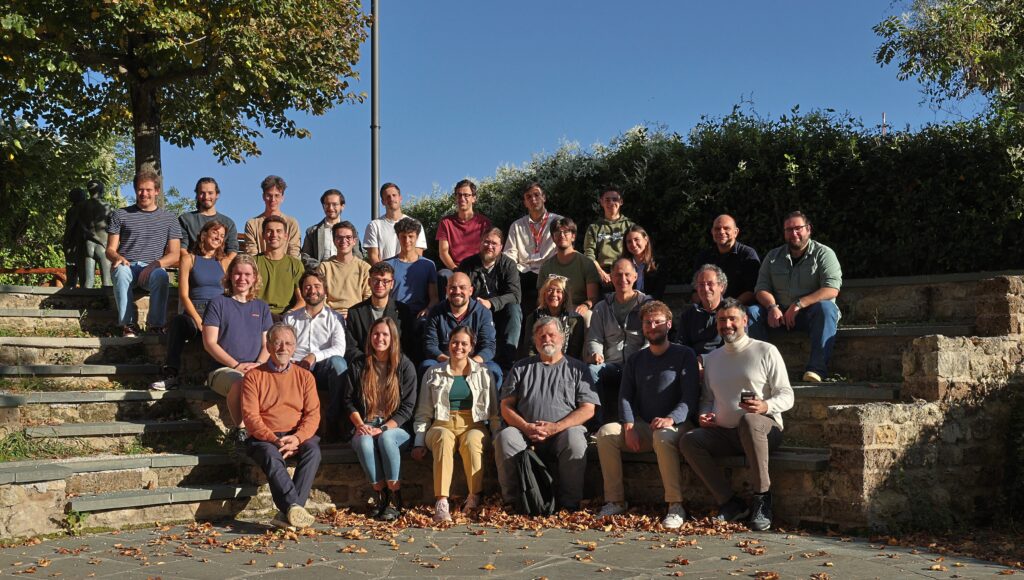
Participants of the ESC2025, in Bertinoro, Italy. Picture credit: Andrea Bocci.
As part of our ongoing commitment to training and development, the Next Generation Triggers project continues to support its members in strengthening their expertise in computing and data science. This year, several of our colleagues travelled to Bertinoro, Italy, to take part in the Efficient Scientific Computing (ESC) School 2025, held from 29 September to 9 October 2025.
Organized by the Italian Institute for Nuclear Physics (INFN) in collaboration with NGT, the school took place in a historic fortress nestled in the Romagna hills, offering an inspiring environment for focused learning and exchange.
Dedicated to developing efficient, large-scale scientific computing applications, the ESC programme covered key topics such as the evolution of processor architectures and parallel programming models, advanced C++, efficient memory usage and floating-point operations, and programming for heterogeneous environments, including multi-threading, GPUs, and MPI-based cluster computing. With about 25 participants, the format remained highly interactive, enabling close contact with the lecturers and active discussion throughout the ten days.
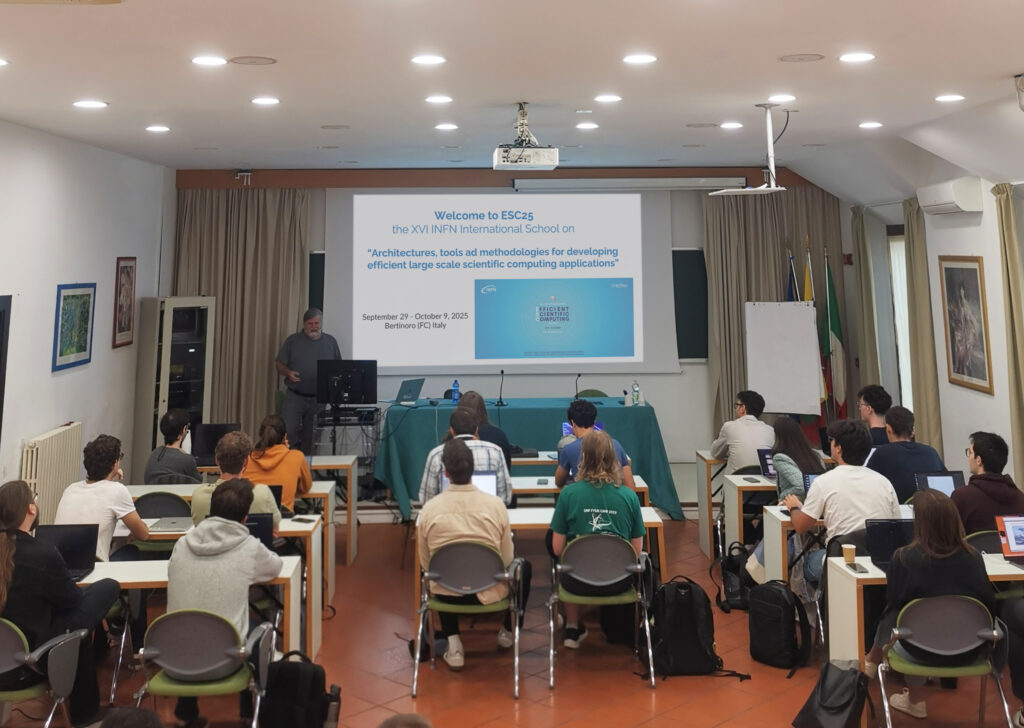
Opening of the ESC2025. Picture: Ana Lopes.
For Mario González Carpintero, NGT fellow within 3.2, the experience was as enriching personally as it was professionally:
“I think we are very lucky to have attended a 10-day computing school in such an amazing place. The views from the venue are incredible. The people we met and the food we had in Bertinoro were amazing as well. The school has been intense and very productive, and most of the topics covered are very relevant to my work. A very, very nice experience overall.”
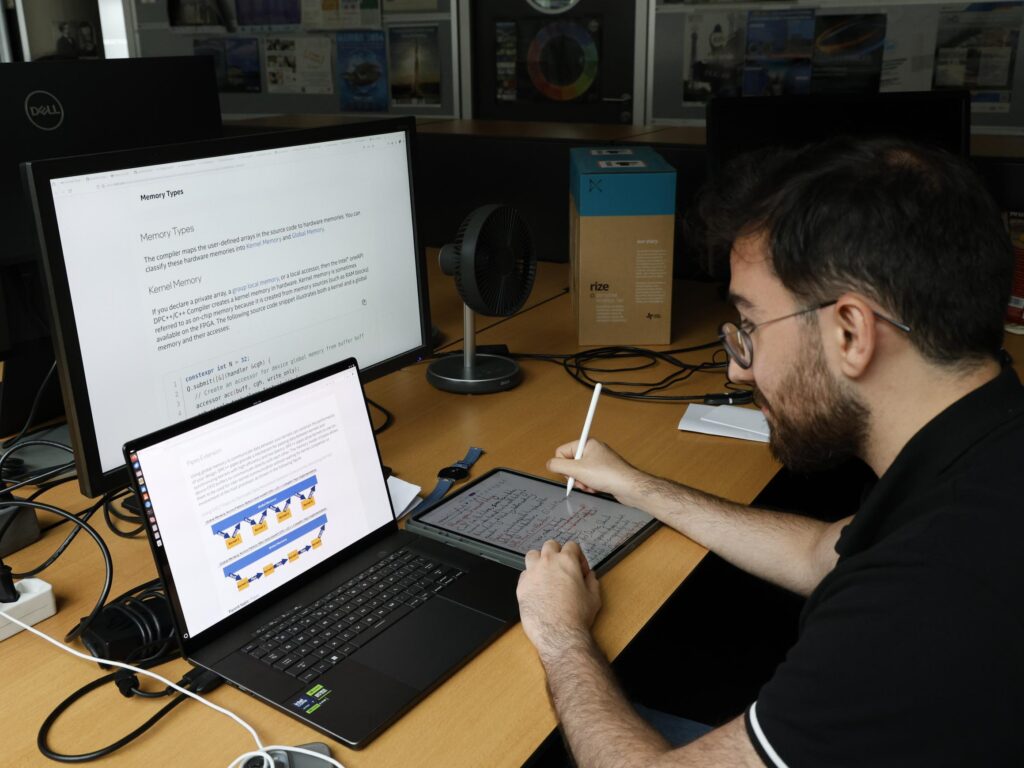
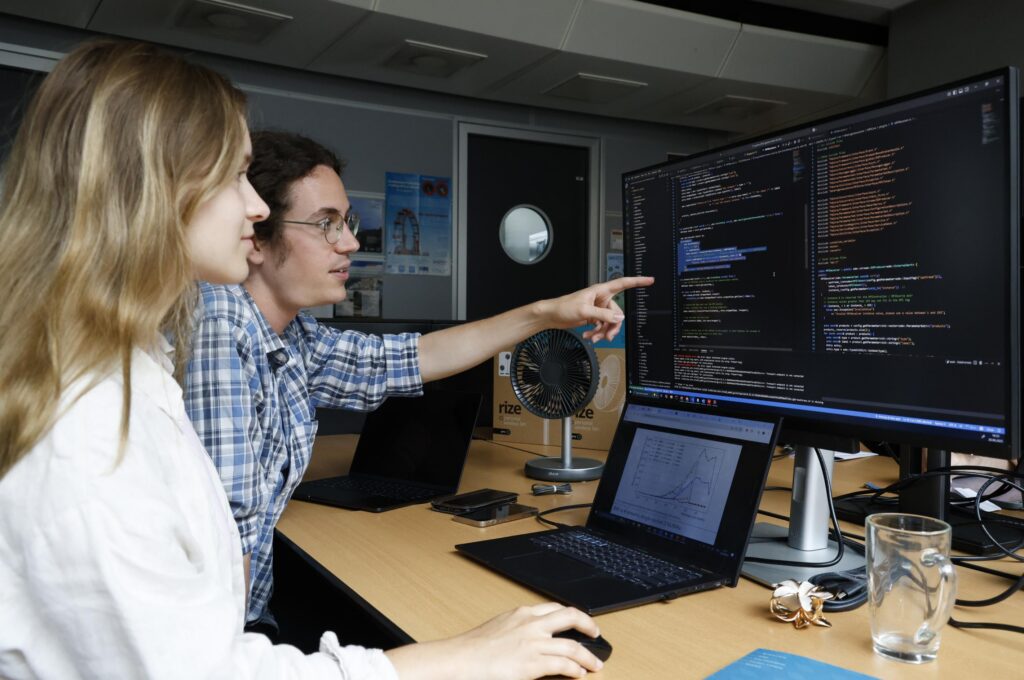
From lectures on efficient programming and parallelization to hands-on exercises with OpenMP, MPI, and GPU programming, participants were able to apply what they learned directly after each session.
Christine Zeh, NGT PhD within 1.7, highlighted how this structure fostered both understanding and application:
“The school was a great opportunity to learn lots of new things about efficient computing, as well as general computing topics, such as the issues that arise when working with floating-point operations. After each lecture, we had time to apply what we had just learnt, working on examples such as a caching allocator or a simulation called ‘The Circle of Life.’ We also had the chance to try some amazing restaurants in town, and on Sunday, we all travelled together to Ravenna to learn about its history and beautiful mosaics.”
Pictures:Andrea Bocci
For František Stloukal, NGT PhD withing 1.7 as well, attending ESC coincided with the start of his PhD, making the experience especially meaningful:
“I found the school extremely beneficial on several levels. It was the first week of my PhD, and many of the fellow participants were PhD students from CERN as well, so I made many contacts for future collaboration. One of the lecturers was Tim Mattson, who was at the birth of OpenMP and MPI and coordinated the first TFLOP computer at Intel. He taught us those subjects, as well as floating-point operations (my PhD topic), and shared his unique outlook on AI and machine learning from the corporate world. The days were filled with intense information and hands-on sessions, and the nights with laughter and friendship, plus plenty of Italian food!”
As their testimonials show, ESC Bertinoro 2025 offered far more than technical insight, it created a space for connection, collaboration, and reflection. The combination of cutting-edge lectures, hands-on programming, and shared experiences made it a truly inspiring environment for both early-career and experienced researchers.
To the organizers, lecturers, and all participants who made this edition possible, thank you for another unforgettable experience. Our NGT colleagues return from Bertinoro not only with new skills and perspectives, but with the renewed motivation to push the boundaries for HL-LHC!