
The CERN STEAM Academy wraps up its first edition
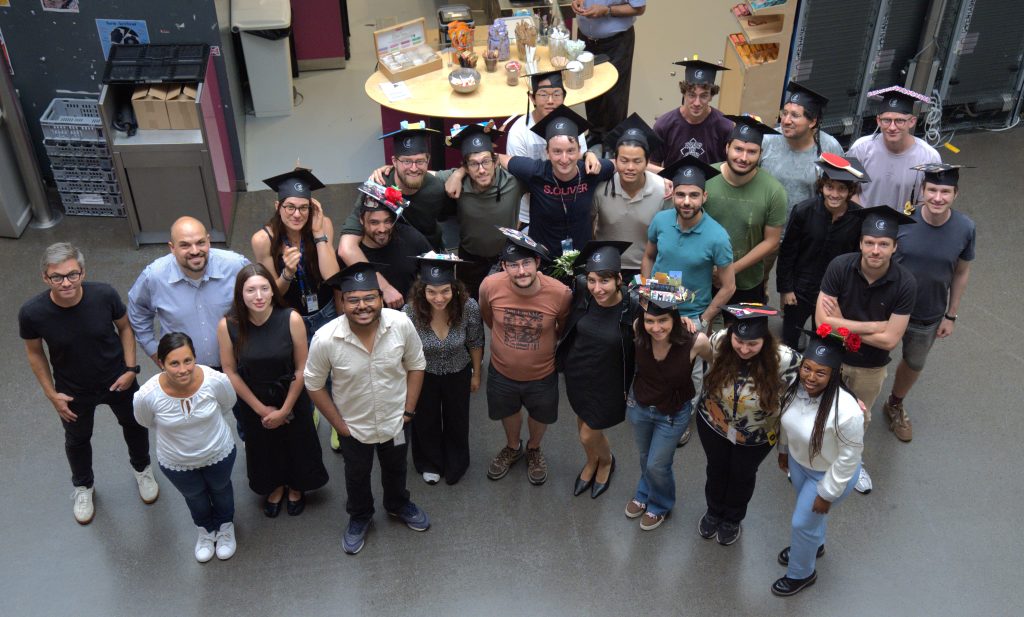
After ten weeks of lectures, hands-on sessions, technical challenges and life at CERN, the first edition of the CERN STEAM Academy came to an end on 28 August 2026.
Bringing together 26 Master’s students, PhD candidates and postdoctoral researchers from a wide range of scientific and technical fields and four different continents, the Academy offered an intensive programme built around technologies that are becoming increasingly important for scientific computing and beyond.
Participants explored three main areas: Software Technologies, Edge Computing, and Data Science and Machine Learning, combining lectures with practical laboratories, clinics and opportunities to work directly with experts.
The programme covered a broad technical landscape. From advanced C++, efficient Python, heterogeneous computing and software performance to FPGA programming, high-speed networking, machine learning, foundation models and AI at the edge, participants were encouraged not only to learn new tools but also to understand how and why they work.
Learning from CERN and beyond
The Academy also brought participants into direct contact with leading figures from research and industry.
Its seminar programme featured Bjarne Stroustrup, creator of C++; Raia Hadsell, Vice President of Research at Google DeepMind; Dr. Ralf Gommers, from Quansight, among many others. Their talks opened the programme beyond the classroom, connecting the technical topics covered by the Academy with wider developments in software, artificial intelligence, reasoning models and networking for AI.
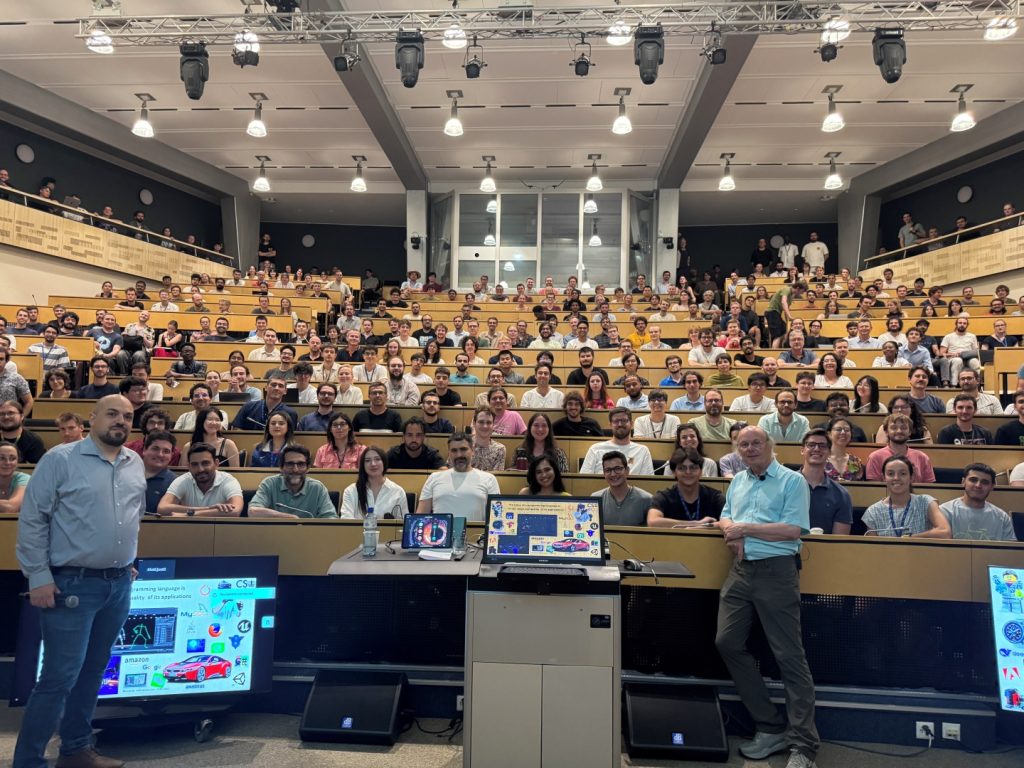
All 2026 seminar recordings can be found here: https://steamacademy.web.cern.ch/seminars-2026/
The students, however, spent much of their time away from the auditorium. Practical exercises and laboratories formed a central part of the programme, giving participants the opportunity to apply concepts themselves, ask questions directly to specialists and learn alongside colleagues coming from very different academic and technical backgrounds.
Ten weeks at CERN
The Academy was conceived as more than a sequence of technical courses. Spending ten weeks at CERN gave participants the opportunity to experience the laboratory from the inside, meet researchers and engineers working across different projects, attend seminars and discover the collaborative environment in which CERN’s computing technologies are developed.
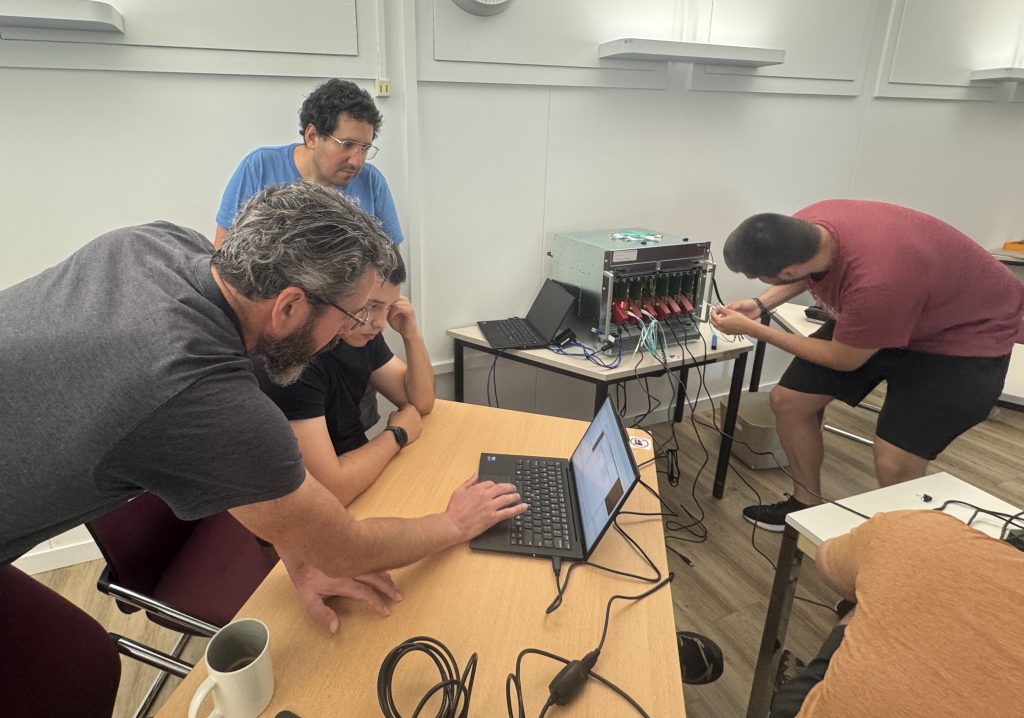
The programme also placed strong emphasis on learning across disciplines. Software specialists encountered hardware-oriented topics, machine-learning researchers explored computing architectures, and participants working closer to electronics or edge computing were exposed to modern AI techniques.
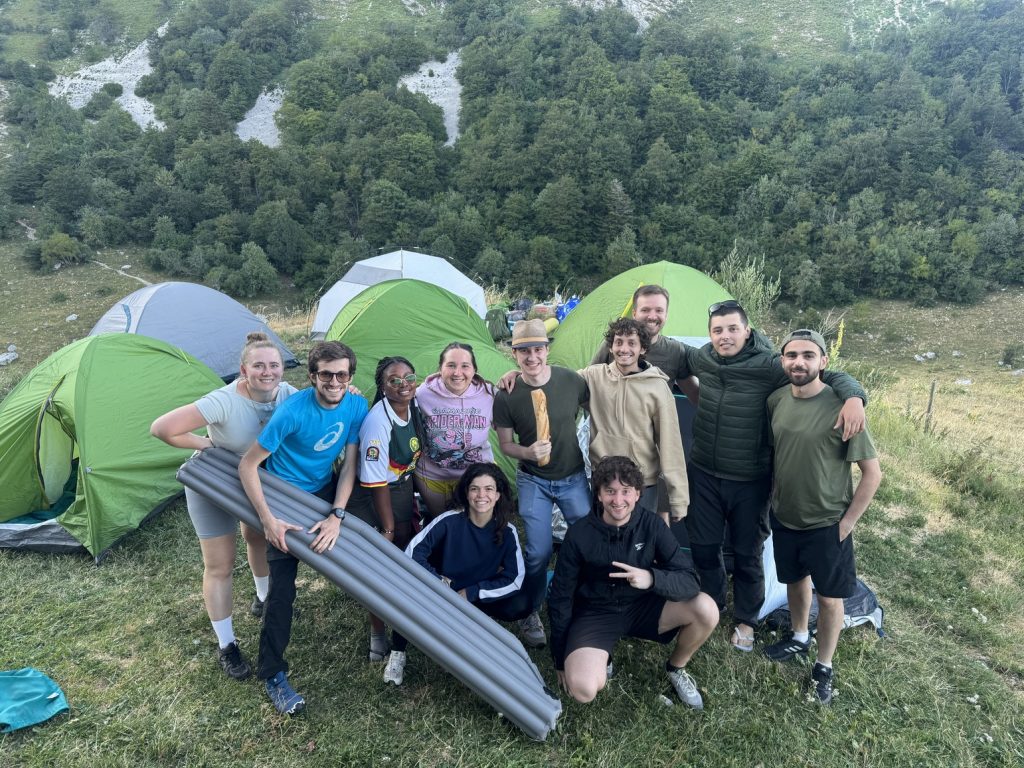
This interdisciplinary approach reflected one of the Academy’s central ideas: many of today’s computing challenges can no longer be solved within a single field. But the Academy was not only about lectures, labs and technical challenges. Over ten weeks, participants also built friendships and shared experiences well beyond the classroom.

Building the first edition
As the inaugural edition of the CERN STEAM Academy, the summer of 2026 was also an opportunity to establish a programme that can evolve together with the technologies it teaches.
Across its ten weeks, the Academy brought together expertise from CERN, academia and industry, combining subjects highly relevant to current and future scientific computing challenges. Participants moved between code, computing architectures, programmable hardware, networking and artificial intelligence, while gaining first-hand exposure to the environment in which many of these technologies are being applied at CERN.
The end of the first Academy therefore marks more than the completion of a summer programme. It provides a foundation for future editions and for a growing international community of participants carrying the knowledge, connections and experience gained at CERN into their own research and careers.
On 28 August, the first CERN STEAM Academy class closed its laptops for the final time. After ten weeks exploring the technologies shaping the future of computing, its 26 participants now take those ideas with them across disciplines, institutions and continents.
Stay tuned for the opening for the 2027 edition. More information about to come soon!